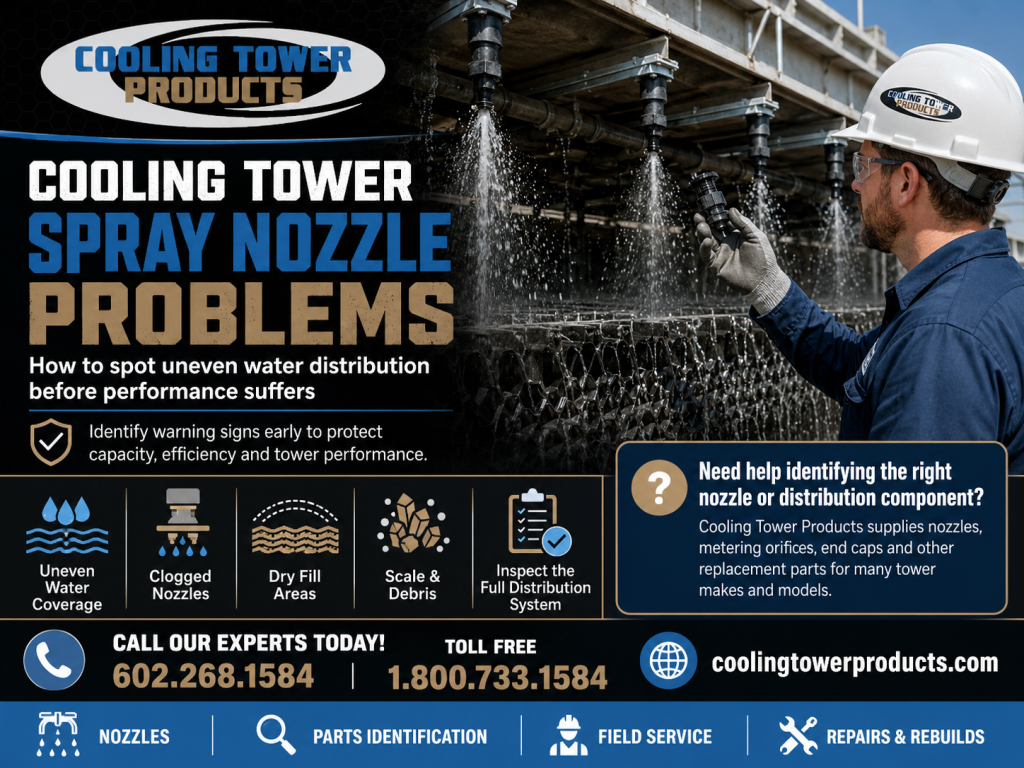
Uneven water distribution can quietly reduce the performance of a cooling tower. One section of fill may remain properly wetted while another develops dry areas, scale or heavy deposits. The fan and pump may continue running, so the problem can be missed until leaving water temperature rises or the tower no longer handles the expected load.
Spray nozzles are a logical place to investigate. Their job is to spread circulating water across the heat transfer surface. When the pattern changes, the cause may be a blocked nozzle, damaged component, incorrect pressure or a larger problem in the distribution piping.
Why Even Water Coverage Matters
Cooling tower fill works best when water reaches the intended surface area. Good distribution creates broad contact between air and water. Dry sections reduce that contact, while overloaded areas carry more water than the surrounding fill can use effectively.
SPX describes cooling tower nozzles as components designed to provide full and even water distribution across the heat transfer fill.
Manufacturers design nozzle systems around a particular tower type, flow range and pressure. Crossflow towers often use gravity distribution basins, while counterflow towers commonly use pressurized piping and spray nozzles.
The inspection method should reflect the actual design rather than treating every tower in the same way.
Watch for Visible Warning Signs
During an operating inspection, look for gaps in the spray pattern, heavy streams where a broader pattern should appear and fill sections that remain noticeably drier than nearby areas. Uneven mineral deposits can also point to a long standing distribution problem.
Other clues include water spilling from a basin, unusual pressure readings, repeated fouling in the same location or a change in cold water temperature under familiar load and weather conditions.
One symptom does not prove that a nozzle has failed, but it identifies an area that deserves closer inspection. BAC notes that broken or clogged nozzles can cause uneven water distribution, scale buildup and reduced capacity.
Understand What Causes Nozzle Trouble
Scale, rust, sediment and biological material can restrict an opening or collect inside a distribution branch. A nozzle may crack, loosen, deform or move out of its intended orientation. Damaged end caps, leaking joints and blocked pipes can produce similar symptoms.
The nozzle itself may also be wrong for the tower. An incorrect orifice size, spray pattern or installation position can prevent uniform coverage even when the part is clean.
Replacing one nozzle with the nearest visual match is not always a reliable repair.
Inspect the Complete Distribution System
Follow the equipment manufacturer’s safety and shutdown procedures before entering or working around the tower. Once safe access is established, inspect nozzles, headers, branches, basin openings, valves and end caps as one connected system.
Check whether debris has collected upstream of the nozzle and whether the water level or operating pressure matches the tower requirements. Confirm that nozzles are seated correctly and aimed in the proper direction.
EVAPCO maintenance guidance calls for monthly checks of the water distribution system, which is a useful reminder that nozzle condition should not be left until a major performance complaint appears.
Clean Only When the Part Is Still Serviceable
A sound nozzle with removable debris may be cleaned and returned to service. Use methods and materials approved for the component. Aggressive tools can enlarge an opening, damage plastic or alter the spray pattern.
Replacement is usually the better choice when a nozzle is cracked, distorted, badly scaled or no longer holds securely.
If several nozzles show the same deterioration, inspect the full set and the water treatment program rather than treating each failure as an isolated event.
Match the Replacement to the Tower
Before ordering, record the tower manufacturer, model, serial number, nozzle location, pipe size and operating arrangement. Photograph the nozzle in place and measure the relevant connection and opening when possible.
State whether the tower is crossflow or counterflow and provide information about water quality and recurring debris.
A knowledgeable parts supplier can use those details to identify a compatible nozzle, metering orifice, end cap or distribution component.
Restore Better Water Distribution With Cooling Tower Products
Cooling Tower Products supplies crossflow and counterflow cooling tower nozzles, metering orifices, distribution pipe end caps and replacement components for many tower makes and models. The Phoenix team can also help inspect, repair and rebuild cooling towers. For help diagnosing uneven water coverage or ordering the correct nozzle, call 602 268 1584 or toll free 1 800 733 1584.
References
Cooling Tower Products Nozzles
SPX Cooling Tower Nozzles and Valves
EVAPCO Cooling Tower Operation and Maintenance Instructions
BAC Parts and Maintenance Guide
SPX Trouble Free HVAC Cooling Towers